
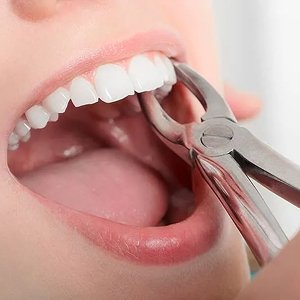
Tooth Extractions
An extraction means to have a tooth removed, usually because of disease, trauma or crowding.
If you need an extraction, your dentist will first numb the area to lessen any discomfort. After the extraction, your dentist will advise you of what post extraction regimen to follow. In most cases a small amount of bleeding is normal. Your mouth will slowly fill in the bone where the tooth root was through the formation of a blood clot.
Here are some tips to follow to make recovery easier: Avoid anything that might prevent normal healing. Don’t smoke or rinse your mouth vigorously. Avoid drinking through a straw for 24 hours.
Follow the diet your dentist suggests.
For the first few days, if you must rinse, rinse your mouth gently. If you experience swelling, apply a cold cloth or an ice bag and call your dentist right away. Ask your dentist about pain medication. You can brush and floss the other teeth as usual. But don't clean the teeth next to where the tooth was removed.
Remember, when having an extraction, today's modern procedures and follow up care (as recommended by your dentist) are there for your benefit and comfort.
Wisdom tooth removal / Disimpaction
Most adults have 32 permanent teeth - 16 each on both the upper and lower jaw. Our third permanent molars, also known as the wisdom teeth, typically erupt between the ages of 16 and 21. However, our jaws may not have enough room for them.
You may have heard of people undergoing a wisdom tooth extraction, or find your own dentist recommending you to have yours removed at some point. Have you ever wondered why?
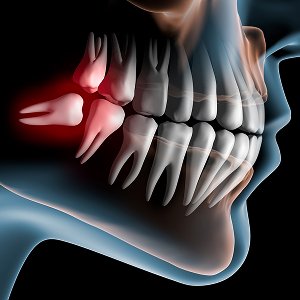
For most people, their wisdom teeth will be blocked from erupting completely in the mouth by the permanent second molars or the surrounding bone and/or gums due to the smaller jaw space. These wisdom teeth are considered to be impacted. Treating impacted wisdom teeth is the most common reason why your dentist will recommend them to be extracted.
The impacted wisdom tooth may partially emerge (partially impacted), showing only the crown of the tooth, or never emerge through the gums at all (fully impacted). The wisdom tooth may also grow at an angle towards or away from the second molar, or grow at a right angle, almost as if it is “lying” down.
Wisdom teeth don’t always need to be removed. For many people, they come through normally and don’t cause any problems. However, as your wisdom teeth are your last teeth to come through, there’s often not enough space in your mouth for them to grow properly. They can get partially stuck in your gums, or grow at an angle. This is called an impacted wisdom tooth. Even impacted wisdom teeth don’t always need to be taken out if they aren’t causing any symptoms.
Sometimes though, the way an impacted wisdom tooth is positioned can make it easy for food and bacteria to get trapped around the gum. This can lead to swollen and sore gums (pericoronitis), tooth decay and infection. If you’re having problems such as these, your dentist may recommend taking the impacted tooth out.
The procedure for removing your wisdom teeth will vary, depending on how difficult your teeth are to take out. Upper wisdom teeth are usually easier to remove than lower ones. Your dentist or oral surgeon can tell you exactly what to expect.
If you’re having your wisdom teeth removed at your dental practice, you’ll usually have it done under local anaesthesia. The local anaesthetic will completely block pain from your gums, but you will stay awake while your wisdom teeth are being removed. You may be offered sedation as well as local anaesthesia. This helps you to relax.
If you’re having your teeth taken out in hospital, you may be offered general anaesthesia. If you have a general anaesthetic, you’ll be asleep during the procedure.
Once the anaesthetic has taken effect, your dentist or surgeon will use special tools to gradually ease your tooth out, cutting into the gum if necessary. If your dentist or surgeon has cut into your gum, you may need dissolving stitches to close the wound.
It may take a few days to feel completely better after wisdom teeth removal. You’re likely to have some pain and discomfort after the procedure. This is usually worse for the first couple of days. You can take over-the-counter painkillers such as paracetamol or ibuprofen. Your dentist or surgeon may suggest you take both medicines because they can work well together to reduce pain.
As well as some pain, you may also have some swelling and stiffness in your jaw for a couple of days. This can make it difficult to open your mouth. Using an ice pack wrapped in a towel can help to reduce this.
Orthognathic ( Upper / Lower Jaw correction ) surgery
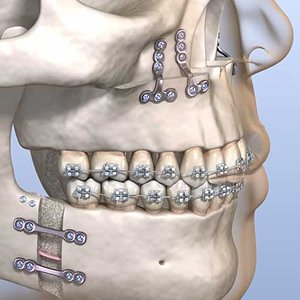
Corrective jaw, or orthognathic surgery is performed by an oral and maxillofacial surgeon (OMS) to correct a wide range of minor and major skeletal and dental irregularities, including the misalignment of jaws and teeth. Surgery can improve chewing, speaking and breathing. While the patient's appearance may be dramatically enhanced as a result of their surgery, orthognathic surgery is performed to correct functional problems.
Jaw Surgery can have a dramatic effect on many aspects of life. Following are some of the conditions that may indicate the need for corrective jaw surgery:
- Difficulty chewing, or biting food
- Difficulty swallowing
- Chronic jaw or jaw joint (TMJ) pain and headache
- Excessive wear of the teeth
- Open bite (space between the upper and lower teeth when the mouth is closed
- Unbalanced facial appearance from the front, or side
- Facial injury
- Birth defects
- Receding lower jaw and chin
- Protruding jaw
- Inability to make the lips meet without straining
- Chronic mouth breathing
- Sleep apnea (breathing problems when sleeping, including snoring)
Your dentist, orthodontist and OMS will work together to determine whether you are a candidate for corrective jaw, or orthognathic, surgery. The OMS determines which corrective jaw surgical procedure is appropriate and performs the actual surgery. It is important to understand that your treatment, which will probably include orthodontics before and after surgery, may take several years to complete. Your OMS and orthodontist understand that this is a long-term commitment for you and your family, and will try to realistically estimate the time required for your treatment.